Palmetto Electric Osprey Blog
The nest is located on Mathews Drive, Hilton Head Island, SC, USA.
01 February 2012
We want to welcome all of our cam watchers to a new osprey season at Palmetto Electric. This year marks our sixth web cam season from Hilton Head Island, SC and the fifth season for the osprey blog where our viewers can post comments about our nest and other osprey sites around the world.
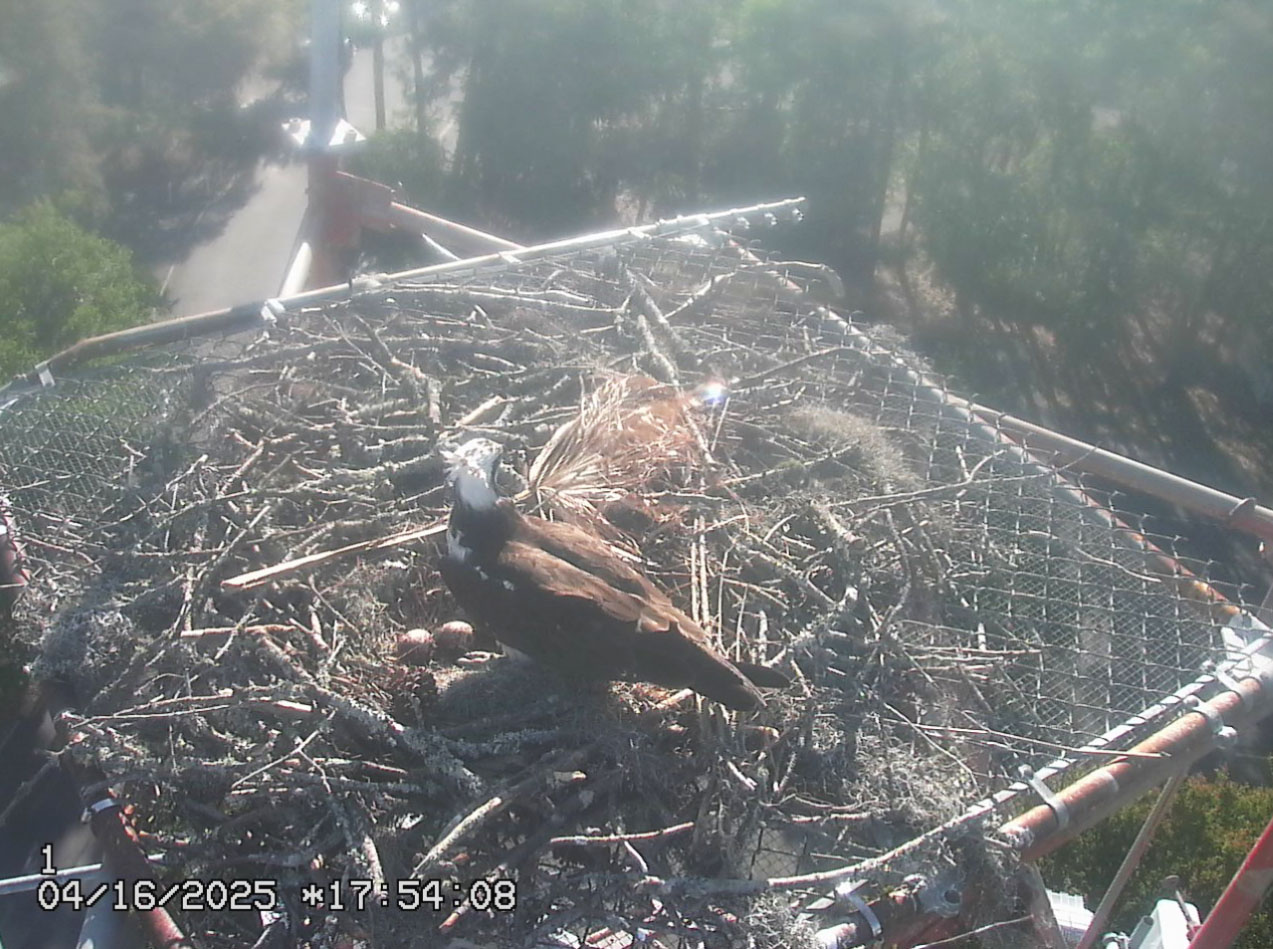
Our nest is located on Mathews Drive and sits upon a 100 foot communications tower. The tower is situated within a quarter mile or so of our local airport. A beacon light to the right of the cam glows intermittently at night; therefore, we do not broadcast night images due to the glare of the beacon. The ospreys don’t seem affected by the beacon’s illumination since they’ve been nesting on the platform since the mid 1980's. Before the platform was installed the osprey built nests on the cross arms of the tower which often came apart and fell to the ground.
In the past viewers have asked why we don’t band the osprey. The communications tower, which is regulated by the FCC (Federal Communications Commission), is required to have a technician that is certified with antenna, tower climbing, and rescue skills. The problem is there isn’t anyone in the area that is certified to climb our communications tower and also knowledgeable of osprey to band them.
Last year we had a new adult pair, named Bea and Jasper, at the nest with their two chicks, MKD and TE, successfully fledging. Over the last few years we have had new pairs take control of the platform so we’ll have to see if Bea and Jasper return or if a new couple settle on the tower.
If you’re new to ospreys, check out our Osprey FAQ page as well as our Osprey Photo Gallery for pictures from past seasons.
Thanks for joining us and we hope to see another successful osprey season!
12 July 2011
Looking Back To The 2011 Season
Our season began mid January when the first osprey was spotted on the nest. In less than a month’s time a new pair had established themselves on the platform without any of last year’s interference from other ospreys. The new male spent little time in repairing the nest, which was a major undertaking since the nest was left unoccupied from 2010 and was practically bare. The pair worked on nest building, though their construction skills left much to be appreciated. By the look of the nests construction, it could be surmised that this was a young breeding pair.
Throughout February and into late March the pair mated and continued nest building and on March 26th the first egg was laid. The second egg was laid March 29th and the third was laid on the 31st. During late March we had tremendous lightning and thunderstorms and it was very encouraging to see that the female was not frightened off and stayed with their eggs.
In April we named our pair Bea and Jasper, which was submitted by Beth from Ohio. The weather improved and Bea and Jasper took turns incubating their clutch of three eggs.
On May 4th the first egg hatched at 9:38 a.m. and the chick was named MKD. May 5th brought us the second chick, TE, which hatched around 6:40 p.m and the third chick, MT, hatched May 7th around 10:13 a.m. With three hungry chicks Jasper’s hunting skills quickly took center stage and he didn’t disappoint by bringing in several Mullet each day. Unfortunately, six days into MT’s life, the third chick, Jasper flew in carrying a stick and inadvertently lifted MT up by the neck and carried him to the edge of the nest. MT fell from the tower and did not survive the 100’ fall.
As May progressed so did the two chicks with the eldest, MKD, showing a bit of aggression towards TE and on occasion its mother Bea. Not a good idea to bite the beak that feeds you. By late May, MKD and TE became very mobile and moved about the platform with ease. With their increased mobility and size it was inevitable that one of them would hit our camera while relieving itself and our view of the osprey family was blurred for most of June which was unfortunate because we missed their development from small chicks to juveniles.
By late June rain finally came to the island and cleared the camera lens in time for us to see the majestic juveniles in their buff feathers and exercising their wings in anticipation of fledging. By the first full week of July the two juveniles had successfully fledged. Currently, Bea and Jasper are maintaining residency of the platform before possibly migrating southward. We do have a few ospreys that stay over the winter so we’ll have to see what this pair will do.
We would like to thank all of our viewer’s and bloggers for their support and comments. The cam will continue to be online throughout the remainder of the year unless we have maintenance to perform. As osprey migration begins in about a month for our northern states and Canada we may see ospreys stopping off for a rest along the East Coast so keep watching for any interesting birds that might visit the tower. This will be the last post for the 2011 season, but we will continue to post comments.
Please join us next season and have a great 2011.
11 July 2011
The juveniles fledged in 8 weeks and are most likely hunting on their own at this point. Since osprey migrate individually, the juveniles must be completely independent of their parents for food by the time southward migration begins. We may continue to see the "family" osprey during July, but they could begin migration to Central or South America in late summer. With Hilton Head's southern location we do have osprey that reside here throughout the winter and do not migrate.
Juveniles become sexually mature around 3 years of age, but may not begin breeding until 5 if nest sites are scarce. Determining a juveniles sex by its coloring is not always exact. In the past juveniles have been banded with information indicating male or female, then as the osprey matured the banding proved to be inaccurate because it could take about to 18 months to reach adult plummage.
06 July 2011
Full adult plumage is achieved at 18 months. Juvenile osprey strongly resemble the adults, except that the brown feathers of the upper body are tipped buff-white, and the streaking on the breast and crown tends to be heavier. The eye color changes from brown to yellow as juveniles mature.
21 June 2011
19 June 2011
The heavy rains that have passed through our area for the last few days has finally cleared the lens housing quite nicely and we all can see the osprey on the tower once again. They just need to keep their aim to the North and South of the camera.Both chicks, or should we say juveniles now, seem to be healthy and have been exercising their wings. The parents continue to maintain the nest and feed their young.
Happy Father's Day to all the dads out there watching our nest!!
15 June 2011
Our two chicks, MKD and TE, are now 6 weeks old and have grown significantly. Unfortunately for all of us their aim upon relieving themselves has been directed at our camera preventing us from watching them transform from gawky chicks to full feathered juveniles. They both have been flapping their wings in order to strengthen their muscles in anticipation of fledging, which is usually in 7 - 9 weeks of age and they will continue to roost on the nest for about another month. With the tower being 100’ high the first flight is always a tense moment.
Bea is still feeding MKD and TE, though they will soon begin feeding themselves. Juveniles will sometimes fly along the male begging for food while he hunts. Juvenile ospreys usually catch their first fish 2 – 8 weeks after fledging.
In 2009, the osprey parents would sit on the communications equipment and squawk at the young possibly enticing their young to take flight. We’ll have to see what approach Bea and Jasper take with their two. Hopefully by then, if not sooner, we’ll have rain to clear the camera housing lens.
On a side note…I’ll be taking a vacation beginning next week, but will be checking the blog to post your comments as I get an opportunity. Also, we would like to thank everyone for their patience with the lens being blurred.
07 June 2011
Friends at Blackwater log reports that they have three chicks that appear to be doing fine despite the intense heat and humidty.
The Dunedin nest is having trouble with it's fledgling ospreys.
The Loch of the Lowes reports that their pair is having to contend with interference from other birds and the incubation of their eggs has become intermittent.
The Hailuoto - Marjaniemi nest reports that their first and second egg hatched yesterday, June 6.
At the Loch Garten nest their two chicks are growing fast as well as experiencing a heat wave the past day.
03 June 2011
29 May 2011
27 May 2011
26 May 2011
News from other sites...
- Friends of the Blackwater Refuge are expecting chicks any time now.
- Loch of the Lowes is on 24 hour watch in anticipation of their eggs hatching. Their male osprey is having trouble with crows and chasing them away from the nest.
- The Dunedin nest in Florida recently banded their three chicks.
- The Hailuoto-Marjaniemi nest, which is nestled in the artic forest in Finland, has four eggs.